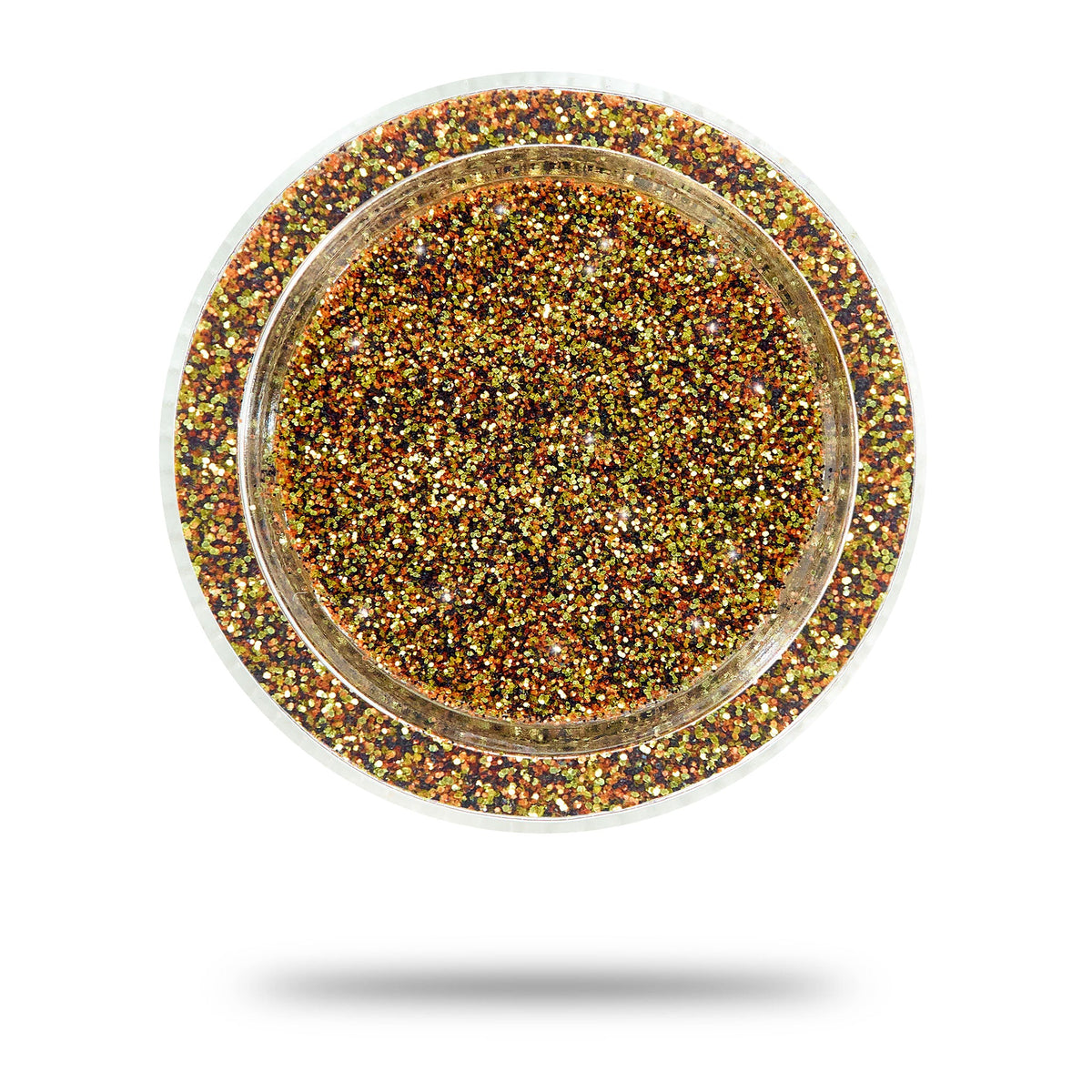
Fine glitter creates a more even, light-catching finish. Chunky mixes create a bolder, more textured effect because the blend includes visibly larger shapes or particles. Start with the visual result you want, then confirm that the exact product label supports your planned placement. You can use one finish on its own or layer fine and chunky products when the product guidance and chosen application method support that use.
Fine vs chunky glitter at a glance
Fine glitter
- Reads as a more even field of shimmer.
- Lets colour carry the look without large shapes becoming the main feature.
- Works well when you want the finish to feel soft, detailed, or blended.
Chunky glitter
- Makes individual particles or shapes more visible.
- Creates a bolder, more textured effect.
- Works well when you want sparkle to become a clear focal point.
Fine and chunky together
- Can create contrast between an even shimmer and larger accents.
- Requires a colour plan so the mix looks intentional rather than crowded.
- Still depends on the labels and guidance for the exact products and placement.
These are visual categories, not universal use labels. A fine blend is not automatically suitable for every placement, and a chunky blend is not automatically excluded from every placement. The exact product label is the deciding source.


Choose the finish before the colour
Colour gets attention first, but particle scale changes how that colour reads. A fine blend spreads the sparkle into many smaller points of light. A chunky mix leaves more space for individual shapes and reflections to stand out.
Start by naming the effect you want:
- Soft and even: begin with Fine Mix Blends.
- Bold and textured: begin with Chunky Mix Blends.
- Layered: choose which finish will lead, then use the second finish as a controlled accent.
This keeps the shopping decision focused. Instead of collecting several appealing colours and trying to make them agree later, you are building one clear finish from the start.
What fine glitter looks like
Fine glitter tends to read as a connected shimmer from normal viewing distance. The particles are present, but the eye notices the colour and overall shine before it notices each individual piece.
That makes a fine mix a useful starting point when you want:
- a softer sparkle rather than a sharply textured effect;
- colour to remain the main visual idea;
- a finish that can sit beside other details without competing with all of them;
- an even-looking base for a layered glitter plan.
The exact result still changes with colour, light, amount, and application. Product photographs should show both a close view of the glitter and an applied look so shoppers can judge the finish instead of relying on a generic colour swatch.
What chunky glitter looks like
Chunky mixes make particle shape and separation part of the design. Larger visible pieces catch attention individually, which gives the finish more texture and a stronger focal effect.
A chunky mix can suit a plan that calls for:
- clear sparkle accents;
- a bolder finish that reads from farther away;
- visible contrast between colours or particle shapes;
- a small area of texture inside a larger look.
More texture also means the mix needs visual breathing room. If every colour, finish, and accessory is competing for attention, the sparkle can lose its shape. Pick one lead idea and let the other choices support it.
How colour and particle mix change the result
The same colour family can feel different across fine and chunky finishes. Fine particles can make the colour read as a more continuous shimmer. Chunky particles can break it into distinct flashes and shapes. Mixed-colour blends add another decision: do you want the colours to merge at a glance or remain visibly separate?
Use actual MoonShatter product photographs to compare:
- the glitter inside the container;
- a close macro view of the particle mix;
- the product in an approved applied-look image;
- the same product under consistent lighting when possible.
That sequence gives a shopper more useful information than a flat colour square.
Can you layer fine and chunky glitter?
Fine and chunky finishes can be combined when the exact product guidance and intended placement support the plan. The easiest visual approach is to choose one lead finish.
For a fine-led look, build the overall shimmer first and keep the chunky texture concentrated as an accent. For a chunky-led look, place the larger visual shapes first and use fine sparkle to connect the colour story around them. In either direction, compare the colours together before application so an unexpected undertone does not pull the look apart.
Before applying anything, review the exact product labels and the Applying BioGlitter guide. A finish name does not replace product-specific intended-use information.
Which MoonShatter route should you choose?
Choose the route that matches the effect you already decided on:
- Explore Fine Mix Blends for a more even shimmer.
- Explore Chunky Mix Blends for a bolder textured effect.
- Build A Sparkle Kit when you want to coordinate several selected colours.
- Browse 5 Festival Glitter Looks when you want visual direction before choosing a finish.
The best choice is the one that matches the planned look and the exact product label. Start with the finish, confirm the intended use, then choose the colour that makes the idea feel complete.
Fine vs chunky glitter FAQ
Which glitter finish looks more subtle?
Fine glitter generally reads as a more even, softer shimmer. Colour, lighting, amount, and application still affect the final result.
Can I combine fine and chunky glitter in one look?
Yes, when the exact product labels and application guidance support your intended placement. Choose one finish to lead and use the other as a controlled accent.
Does fine glitter automatically mean it is suitable for eyes or lips?
No. Particle scale is a visual category, not proof of intended use. Check the exact product label before choosing any placement.
How can I compare glitter online?
Look for real product photographs that show the container, a macro view, and an approved applied look. Do not rely on a generic colour swatch to represent particle size or texture.