About BioGlitter
The basics behind MoonShatter biodegradable glitter and how it differs from conventional glitter.
What is biodegradable glitter made from?
Non-GMO eucalyptus trees which have been sustainably farmed. It still has the same reflective properties as conventional glitter from the super thin film of aluminum placed above the cellulose film.
What is conventional glitter made from?
Plastic which can sometimes contain harsh chemicals which you do not really want to be putting on your skin. If you wash this down the drain, it may end up in the sea. BioGlitter has been created to marine and wastewater safe standards and is vegan.
Application
How to apply, wear, and use MoonShatter glitter with the right bonder.
How do I apply biodegradable glitter?
Start with our bonders: Aloe Gel Bonder or Eyes & Lip Bonder (skin-safe glue). Apply a thin layer, let it get tacky, then press glitter on.
Hair: work a small amount of Aloe Gel Bonder, or clear hair gel, through strands, then press glitter on.
Outside or using sunscreen: apply SPF first and let it set. Then add a bonder and press glitter on. Dry-touch SPFs grip best.
You can also use moisturizing cream, shea butter, lip balm, or un-petroleum jelly for short wear.
We keep glitter dry. Because it biodegrades with moisture, we do not sell pre-mixed gel pots.
Is your glitter only for use on the skin?
It is cosmetic grade, so it is suitable for use on the face, body, and hair. It can also be used in craft projects if you wish.
Safety and Packaging
Product safety, cosmetic-grade standards, and why MoonShatter uses reusable jars.
Has biodegradable glitter been tested on animals?
No. Biodegradable glitter is not tested on animals and is vegan-friendly.
How is cosmetic glitter different from craft glitter?
MoonShatter products are safe for your face because they contain cosmetic grade glitter. Cosmetic grade glitter is higher quality, produced with FDA-approved materials, and manufactured with stricter standards for cleanliness than craft glitter. It is also 30-40% softer than traditional plastic glitter, so it feels better on your face.
You can still use our glitter for eco-conscious crafting.
Why do you use glass jars?
We use glass jars because they are reusable. Once you have bought a starter kit, next time you can simply purchase a refill glitter pack and fill up your jar.
Will MoonShatter BioGlitter biodegrade inside the package?
MoonShatter products are very stable and only begin biodegrading with the introduction of moisture and active microbes. That is why we do not pre-mix the glitter with gels or liquids.
The best way to apply the glitter is to use a makeup brush to keep the container free of bacteria that could be transferred from your skin. Unless moisture gets inside the container, the glitter will not biodegrade in the package.
Biodegradation Proof
How biodegradation works, what has been tested, and why dry packaging matters.
It biodegrades? Prove it!
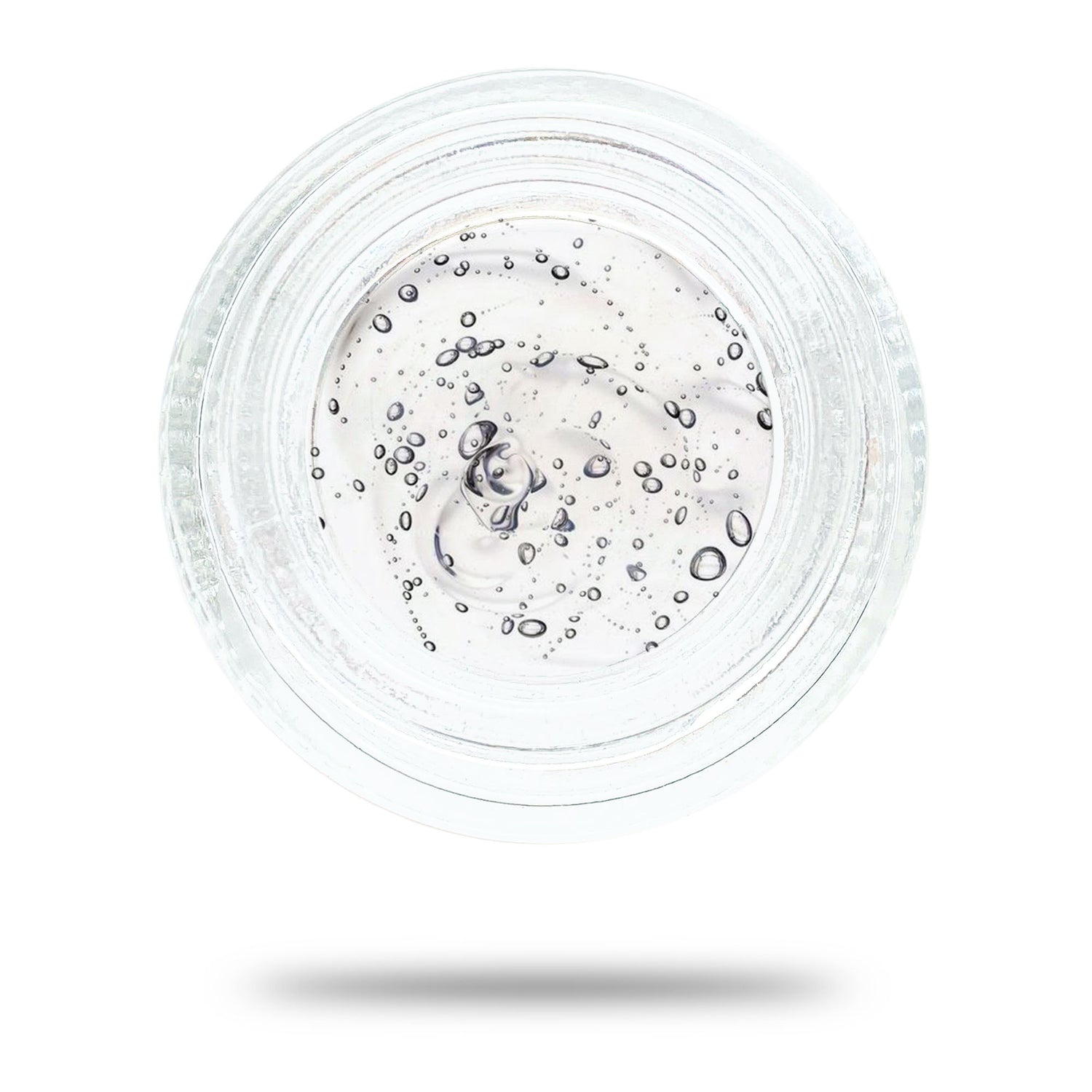
Bioglitter clears ISO 14851/14852 freshwater tests and TÜV Austria OK biodegradable WATER audit standards, meaning more than 90% breakdown in 56 days, proved in triplicate by an ISO-17025 lab with extra ecotoxicity screens.
TÜV calls this seal the highest level of its kind in the world, so it is widely viewed as a gold standard for showing a product really vanishes in rivers and lakes.
Does water alone biodegrade the glitter?
No microorganisms means no biodegradation. The glitter only starts breaking down when environmental bacteria or other microbes are present along with moisture.
In the dry jar, or in an alcohol or oil base, the particles stay intact for years because those cosmetic systems keep microbe counts near zero inside the packaging. The cleaner it is kept, the longer it will last.
Natural water vs. cosmetic-grade water: what is the difference?
Environmental water, such as rivers, lakes, and soil run-off, contains active microbes. When Bioglitter ends up there, it has both moisture and a robust bacterial community, so biodegradation begins.
Inside a jar or preserved formula, the picture is different. Cosmetics are blended with purified or de-ionized water and must stay below strict microbiological safety limits. Preservatives keep counts near zero, so the glitter remains stable.
Ingredients and Versions
The functional layers, binders, and product-version differences behind the sparkle.
What is Styrene/Acrylates Copolymer?
This ultra-thin lacquer layer, originally used in Sparkle V1, locks the microscopic aluminum film to the cellulose core while still passing ISO 14851/52 biodegradability tests.
HOLO, Sparkle V2, and Sparkle V3 use even more nature-derived or EU-compliant binders, such as Pullulan in V2 and HOLO, and Polyvinyl Butyral plus copal in V3, to improve biodegradation speed, color-bleed resistance, and solvent stability. These layers help the sparkle of the aluminum remain attached to the cellulose core. PURE does not have it because it does not contain aluminum.
What are the version-to-version differences?
SPARKLE V1, V2, V3, and HOLO: all share the same cellulose core. The newer binders simply improve color-bleed resistance in water and solvents.
PURE: aluminum-free, with no lacquer binders needed, but it follows the same biodegradation trigger.
You do not use Sparkle V3 yet?
Sparkle V3 is Bioglitter’s newest metallic range, built to survive demanding formulas, so it is useful for ready-made gels, polishes, and liquid soaps. It is also compliant with the EU 2023/2055 microplastic rule and remains reflective thanks to its bleed-resistant lacquer.
Right now V3 comes in four classic shades: Silver, Platinum, Dark Gold, and Copper. The current MoonShatter line focuses on colorful loose blends you mix with aloe or gloss bonder just before use to maximize versatility.
We are already prototyping lip-gloss wands and festival-ready glitter paste. When those formulas are ready, Sparkle V3 along with PURE will be front-of-queue for the next evolution.